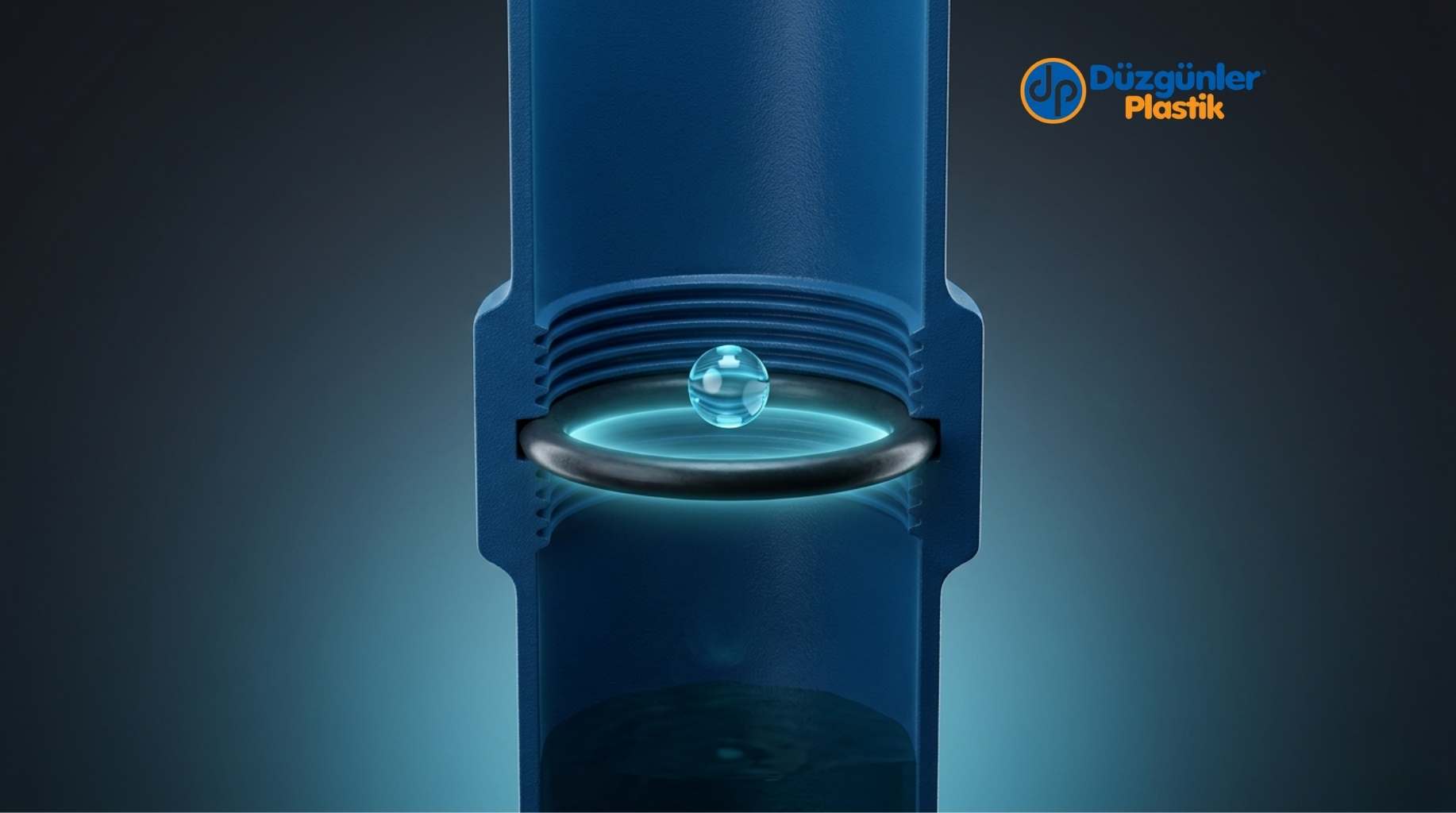
Leak testing on column pipes is conducted by filling the pipeline with water and increasing the pressure to 1.5 times the operating pressure to monitor for any drops or visible leaks at connection points. This process is vital to ensure the integrity of the submersible pump pipe and to prevent water loss in deep well systems.
As Düzgünler Plastik, we integrate a special square thread system and high-quality O-rings in our uPVC column pipes to ensure maximum sealing under high-pressure conditions. Professional leak testing must be performed during the assembly phase before the pipes are lowered into the borehole to guarantee long-term system efficiency.
To guarantee a secure borehole pipe installation, follow these technical steps:
Preparation: Seal the ends of the pipe column using test plugs and ensure all air is removed via relief valves.
Filling: Slowly fill the pipes with water until the entire line is filled without any air pockets.
Pressurizing: Use a hydraulic pump to increase pressure to 1.5 times the rated pressure (e.g., test a PN16 pipe at 24 bar).
Holding Period: Maintain the test pressure for at least 30 to 60 minutes once stabilized.
Inspection: Monitor the pressure gauge and physically check each plastic column pipe joint for any moisture or leaks.
In deep well systems, the column pipe for submersible pump is subject to extreme vertical loads and hydraulic pressure. A small leak can cause thread erosion over time, potentially leading to the pump falling into the well (well collapse). Additionally, leaks increase energy costs and reduce the overall efficiency of agricultural or industrial water systems.
Düzgünler Plastik was the first company in Turkey to produce plastic column pipes for submersible pumps. Our products stand out due to:
Square Thread System: Provides high load-bearing capacity and a secure mechanical lock.
O-Ring Structure: Ensures 100% leak-proof connections without needing extra sealing materials like Teflon.
Durability: Resistant to corrosion and chemicals, ensuring the column pipe price provides the best long-term value.
A standard test usually lasts 60 minutes after the pressure has stabilized to detect even the smallest micro-leaks.
A drop in pressure indicates a leak. You must inspect the threads and O-rings, and if necessary, replace the faulty pipe section before re-testing.
A hydraulic test pump, precision pressure gauge, end plugs, and air release valves are required for an accurate test.
The industry standard is 1.5 times the nominal working pressure of the specific pipe grade.
No. Even new pipes should be tested after assembly to ensure the O-rings are seated correctly and no damage occurred during transport.
Column pipes are used to transport water from submersible pumps to the surface, designed to handle high pressure and the weight of the pump.
Consider the installation depth, the pump's head pressure, and ensure the pipes have a robust square thread system for safety.
When installed correctly using Düzgünler Plastik products, these pipes can last over 50 years due to their non-corrosive nature.
For more information about our products and production processes, please contact us.
For more content, please visit our blog.
© 2025 DÜZGÜNLER PLASTIK | All Rights Reserved.


