
How to Remove a Deep Well Pipe from a Drilling Well?
How to Remove a Deep Well Pipe from a Drilling Well? - Technical Guide by Düzgünler Plastik
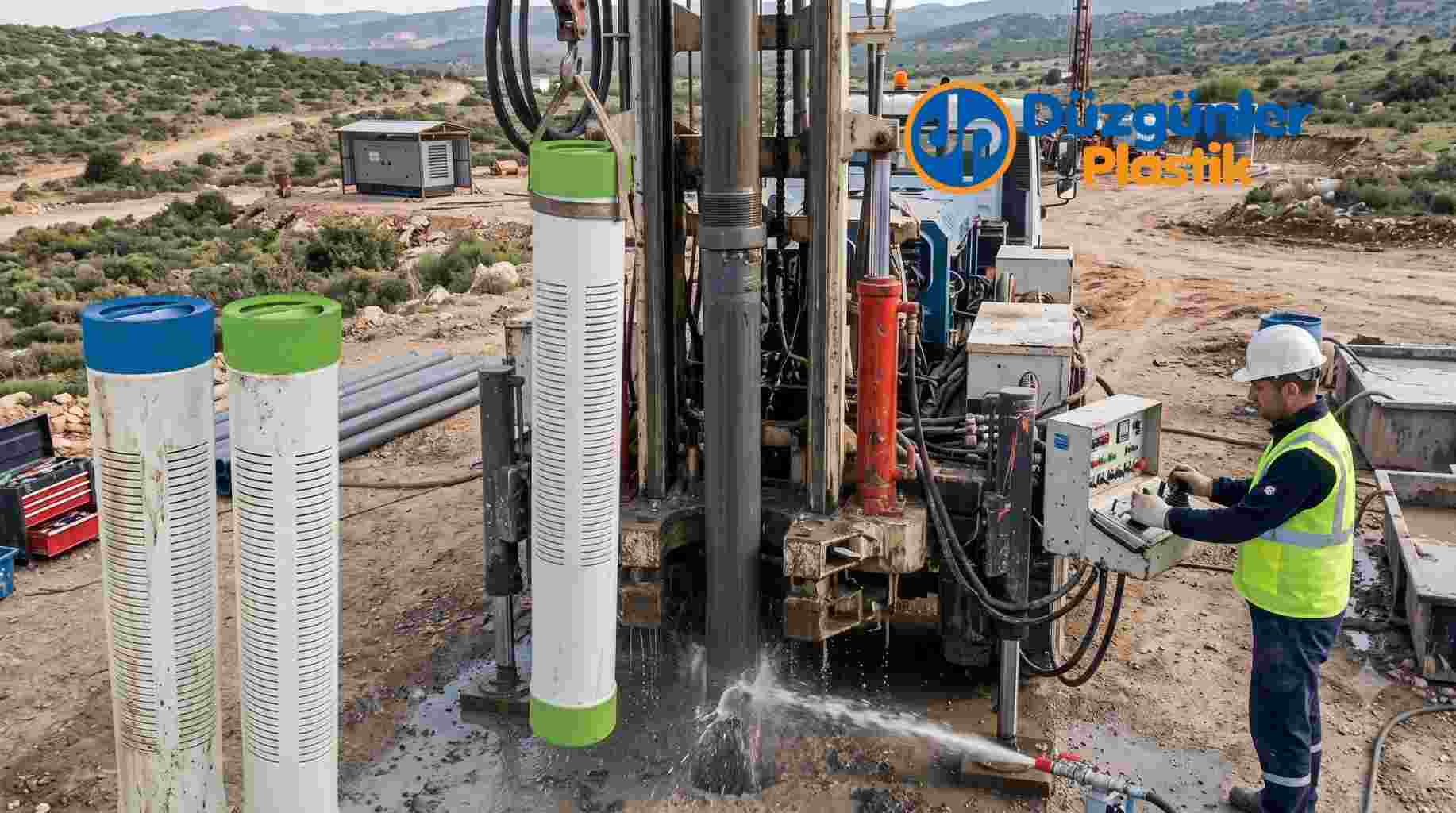
To extract a stuck or damaged deep well pipe from a drilling well, professional drilling rigs, internal or external fishing tools, and heavy-duty hydraulic jacks are utilized to pull the pipe vertically upward. During this extraction process, precise torque control must be maintained to prevent the uPVC or steel casing from fracturing inside the well.
Founded in 1975 under the leadership of Ekrem Düzgün, Düzgünler Plastik continues its operation as a premier pioneer in the plastic pipe manufacturing sector under the stewardship of his sons, Ziya Düzgün and Kemal Düzgün. Strategically located in the Konya 3rd Organized Industrial Zone with a massive footprint of 100,000 m² open and 30,000 m² closed production area, our brand is universally trusted for high-end column pipe and global deep-well-pipes engineering. This technical removal guide has been meticulously composed by our senior R&D engineers to ensure the structural integrity of your water well casing assets during unexpected retrieval operations.
What are the Steps to Pull out a Deep Well Casing Pipe?
Extracting a uPVC column pipe or deep well casing from an active borehole is a highly volatile engineering task. Utilizing improper structural force can cause pipe ovality, slot shearing, or complete pipe separation, which permanently ruins the borehole asset.
Step-by-Step Secure Extraction Methodology:
-
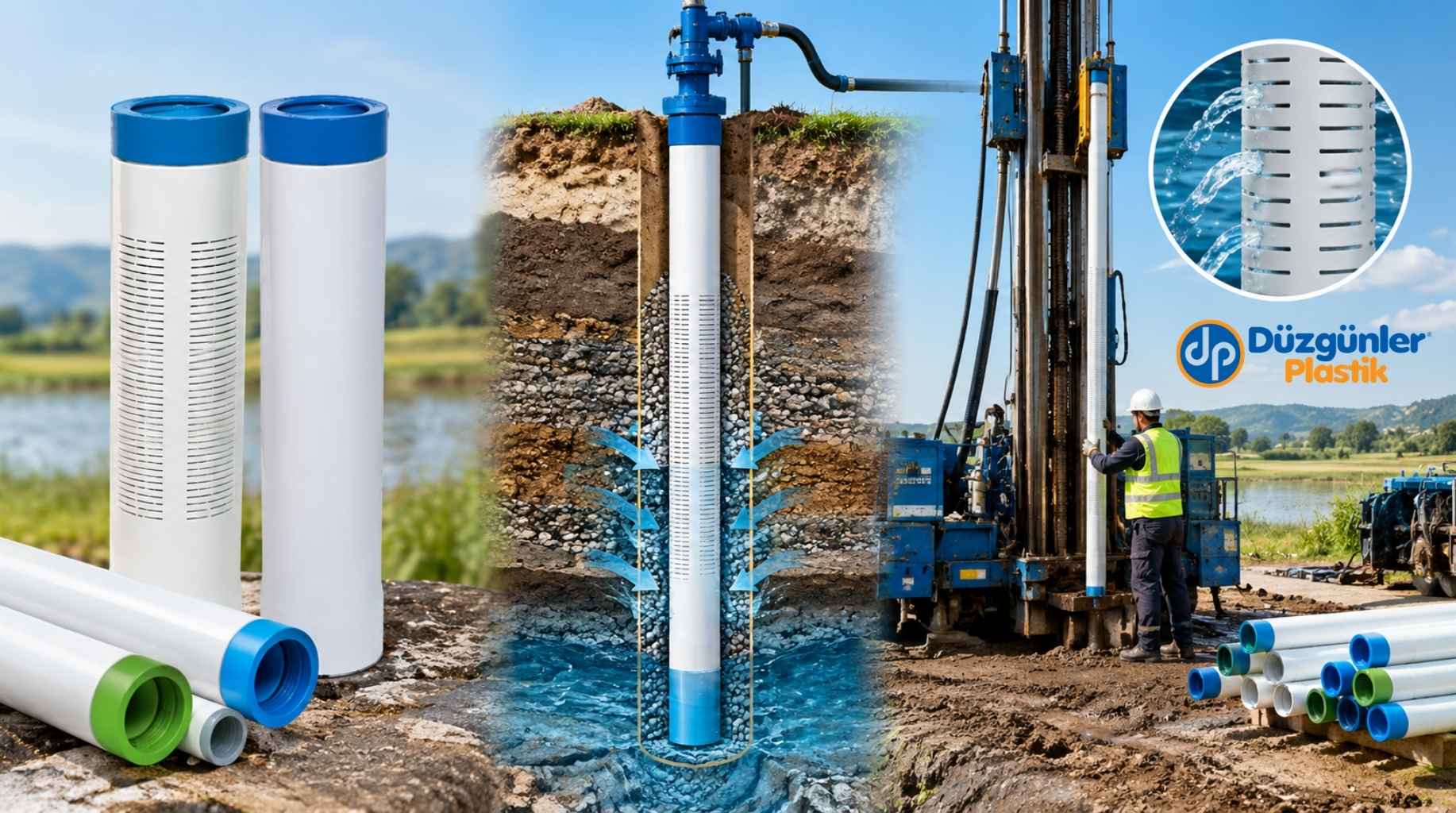
Borehole Fluid Flushing: High-pressure clean water is injected into the borehole to fluidize and loosen built-up silt, compacted sand, and dense clay clinging to the outer pipe wall.
-
Clamping and Anchoring: Heavy-duty casing elevators or specialized slips are securely attached to the top section of the pipe to distribute the axial pulling load evenly.
-
Vertical Axial Liftoff: The hydraulic rig applies a steady, purely vertical pulling force without allowing any lateral sway or bending moments that could crack the plastic.
-
Thread Disassembly: As each 6-meter pipe segment is cleared from the borehole mouth, the specialized square threads are uncoupled smoothly via industrial chain wrenches.
Drop Pipe Extraction vs. Muhafaza Casing Pipe Removal
The mechanical forces required to pull a inner submersible pump pipe (drop pipe) are drastically different from extracting an outer well casing structure. Detailed below:
| Technical Parameters | Submersible Drop Pipe Extraction | Deep Well Casing Removal |
| Friction Resistance | Minimal friction, only suspended weight (+). | Extremely high due to surrounding geological earth pressure (-). |
| Joint Design | Easy uncoupling thanks to smooth threads and O-rings (+). | High torque requirement to break loose from soil bonds (-). |
| Risk of Total Loss | Low risk; easily replaced if dropped (+). | Critical risk; casing failure completely terminates the borehole (-). |
| Equipment Footprint | Mobile light winches or tripods are sufficient (+). | High-tonnage drilling derricks and hydraulic jacks are required (-). |
How High-Quality uPVC Deep Well Pipes Simplify the Removal Process
Düzgünler Plastik’s premier plastic column pipe and deep well casing configurations—manufactured strictly to TS 11794 standards and ISO 9001:2015 specifications—deliver outstanding resilience during extraction. As the first enterprise in Turkey to successfully manufacture submersible uPVC column pipes, we build our products to handle both extreme tension and seamless disassembly.
-
Elastomeric Flexural Strength: Our specialized virgin uPVC compound slightly flexes under shifting soil pressure, significantly decreasing the chance of the pipe becoming permanently wedged.
-
Precision Square Thread Engineering: The male-female square threads designed by our internal R&D unit maintain excellent tensile rating, preventing thread stripping under intense vertical loads.
-
Ultra-Smooth Outer Surface: The pristine extruded exterior of our pipes prevents soil adhesion and calcification, minimizing friction to slide upward smoothly.
-
Residual Market Value: Because Düzgünler Plastik well casings can be extracted without cracking, they retain high integrity, making them highly valuable assets that avoid structural degradation.
Frequently Asked Questions - FAQ
How do you extract a stuck deep well pipe?
To pull out a stuck casing, high-pressure air or water jetting must be applied first to liquefy the sand bridge around the pipe. Once loose, high-tonnage hydraulic jacks are linked to the casing collar to pull the pipe vertically upward in controlled stages.
Will a uPVC borehole pipe break when pulled up?
Pipes formulated with low-grade recycled plastics are highly prone to tensile failure. In contrast, Düzgünler Plastik’s TS 11794 certified uPVC casing and screen models possess ultra-high tensile strength ratings designed to endure heavy rig pull stresses without breaking.
What tools are required for borehole pipe retrieval?
The operations require heavy-duty casing elevators, high-pressure hydraulic jacks, specialized internal overshots or spears (fishing tools), and high-capacity drilling rig masts.
How do you pull a slotted water well screen safely?
Slotted PVC pipes are flanked by gravel pack filters. During extraction, backwashing must be executed to push the gravel away from the slots, preventing the stones from jamming the pipe against the borehole wall.
Is it easier to extract a uPVC casing or a steel casing?
uPVC casing pipes are remarkably lightweight compared to steel and are immune to rust, meaning they never bond chemically to the borehole wall. Consequently, extracting plastic casings is faster, safer, and far more economical than dealing with heavily corroded steel mains.
People Also Ask - PAA
Does the borehole pipe diameter alter the complexity of extraction?
Yes. As the diameter expands (e.g., from 110mm up to large-scale industrial sizes), the surface area in contact with the earth increases exponentially, requiring substantially higher rig tonnage to overcome soil friction.
What happens if a casing pipe snaps inside the well?
If the pipe shears internally, specialized fishing tools like tapered taps or die collars are lowered into the borehole to thread into the broken section mechanically, allowing it to be hoisted up.
Can an extracted uPVC deep well pipe be reused in another borehole?
If the retrieved pipe is a genuine Düzgünler Plastik uPVC casing and the square threads along with the wall structure show no deformities, it can be washed, inspected, and safely redeployed in a subsequent project.
For more information about our products and production processes, please contact us.
For more content, please visit our blog.
Similar Blogs