
Latched Pipe Systems in Field Irrigation
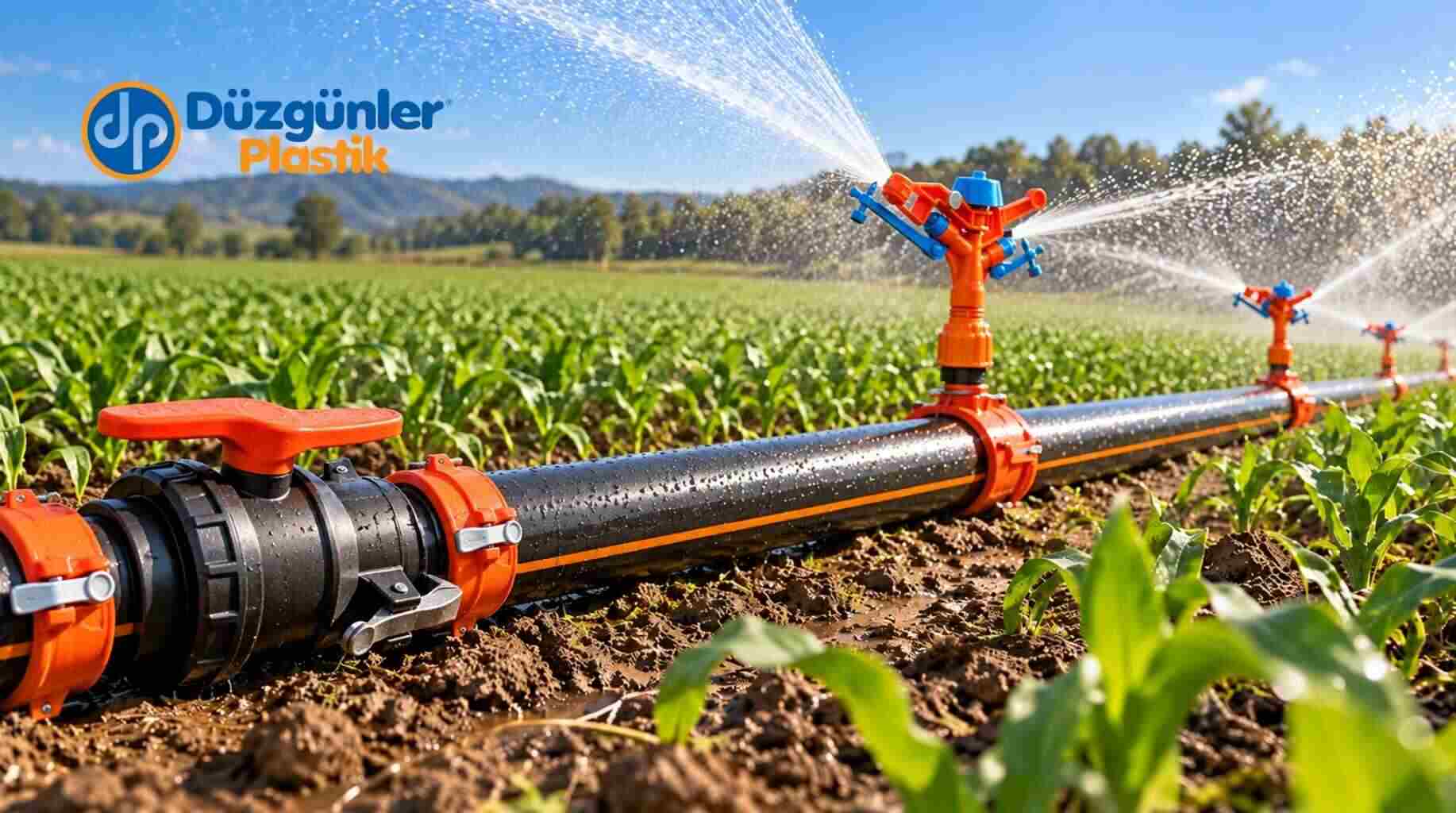
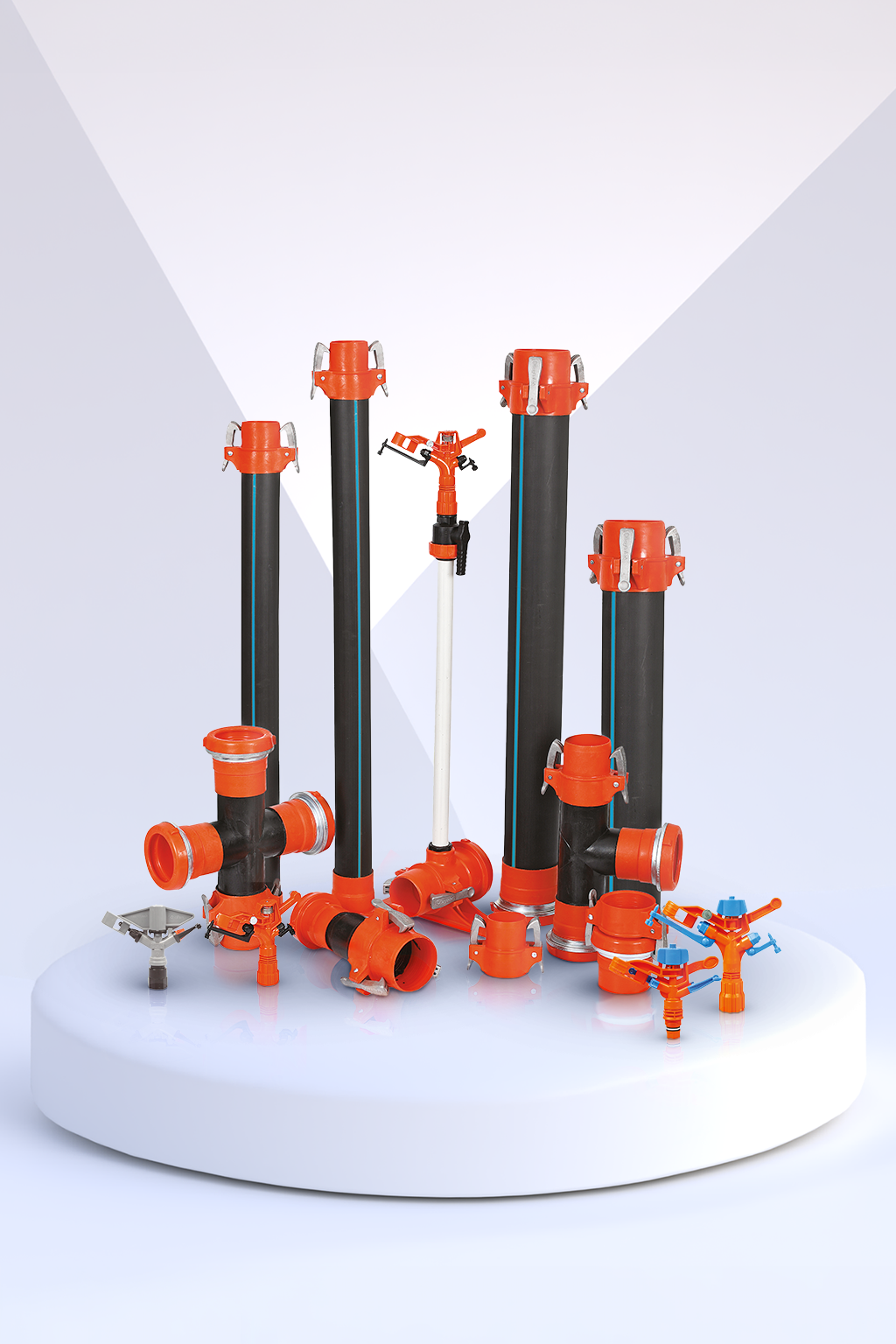
Latched pipe systems are portable sprinkler lines in which pipes are connected in seconds through latch-lock couplings. Because they can be installed and dismantled by hand, without tools, and the gasketed latch provides a leak-proof joint, they are one of the most practical solutions for seasonal field irrigation.
In this article, you will find how latched sprinkler pipes work, how a field line is set up, and how the method compares to drip irrigation, based on the manufacturing experience of Düzgünler Plastik, a pipe producer operating since 1975.
What Are Latched Sprinkler Pipes?
Latched sprinkler pipes are portable agricultural irrigation pipes made of high-density polyethylene (HDPE), joined by a latch coupling that locks by hand. Sprinkler heads mounted along the line distribute water over the field in a uniform, rain-like pattern.
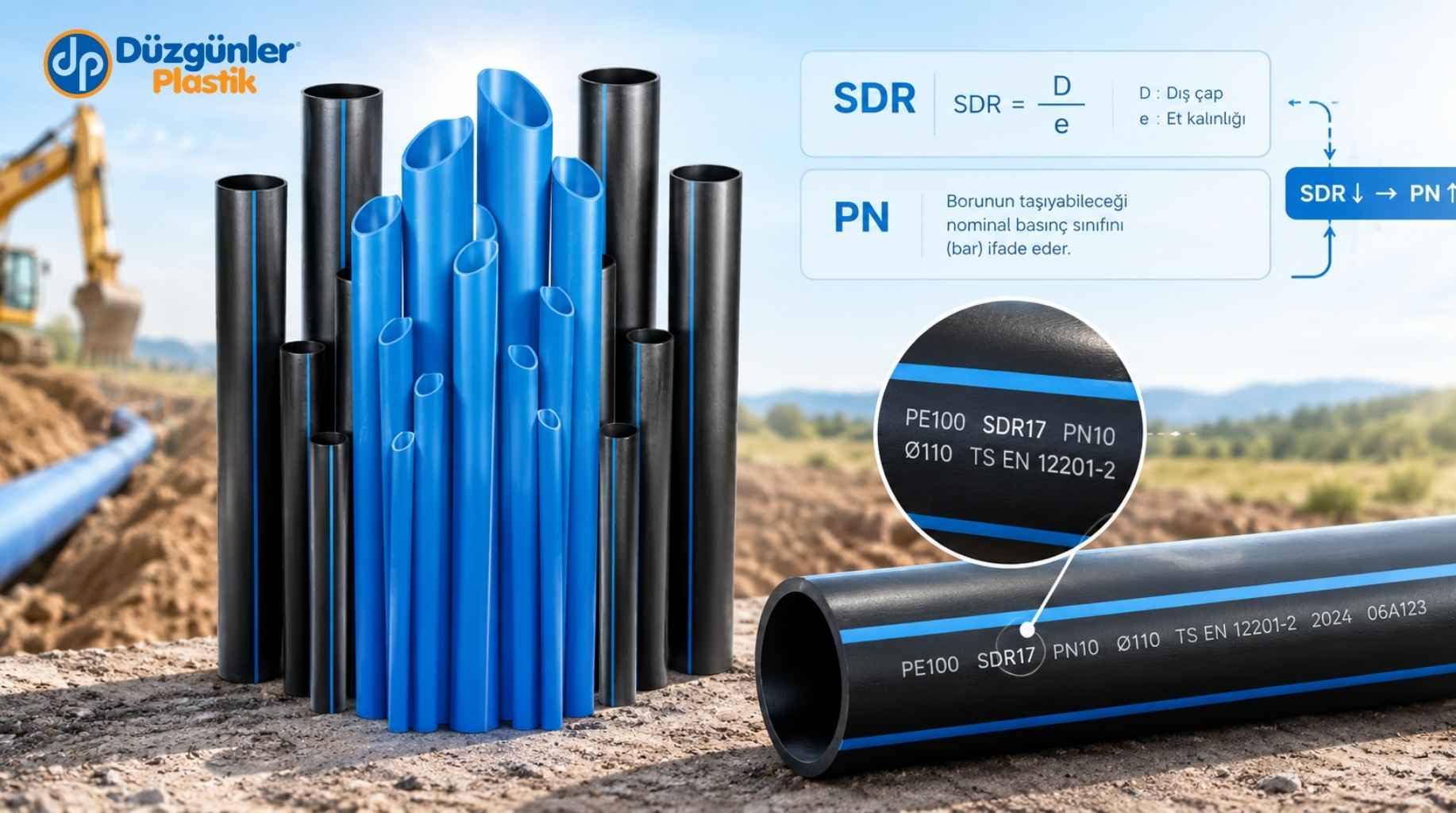
Düzgünler Plastik latched sprinkler pipes are produced in 5, 6, 8, and 10 Atü pressure classes, in accordance with the TS EN 12201-3 standard. Their UV-resistant structure preserves the pipe's form and strength during long exposure to sunlight in field conditions.
How Is a Latched Pipe System Set Up in the Field?
The greatest strength of the latched system is installation speed. A typical field setup is completed in five steps:
-
1. Main line: The main line is laid from the pump or hydrant outlet to the head of the field.
-
2. Connection: Each pipe is inserted into the coupling and the latch is locked by hand; the gasket seals the joint.
-
3. Sprinklers: Sprinkler heads are fitted to the outlets along the line via risers.
-
4. Pressurizing: The end of the line is closed with an end cap and the system is pressurized gradually.
-
5. Relocation: After irrigation, the latches are released and the line is moved to the next plot.
Because the same pipe set can serve several plots in one day, the investment required per hectare drops considerably.
What Are the Advantages of Latched Pipe Systems?
-
Quick coupling: The latch lock allows fast, tool-free installation and dismantling.
-
Leak-proof joints: The gasket inside the coupling forms a leak-proof joint under pressure, reducing water loss along the line.
-
Light weight: HDPE is lightweight, so pipes are carried by hand across the field and transported economically.
-
UV resistance: UV-stabilized material delays embrittlement in pipes working under direct sun.
-
Uniform irrigation: With correct sprinkler spacing, water is distributed evenly across the whole field.
-
Flexibility: A portable line adapts to different plots and different crops within the same season.
Which Pressure Class Suits Which Field?
The pressure class is chosen according to pump outlet pressure, line length, and field slope. The 5-6 Atü classes are sufficient for short, flat lines, while 8-10 Atü classes are preferred for long lines and sloped terrain where pressure loads build up.
Latched Sprinkler or Drip Irrigation: Which One?
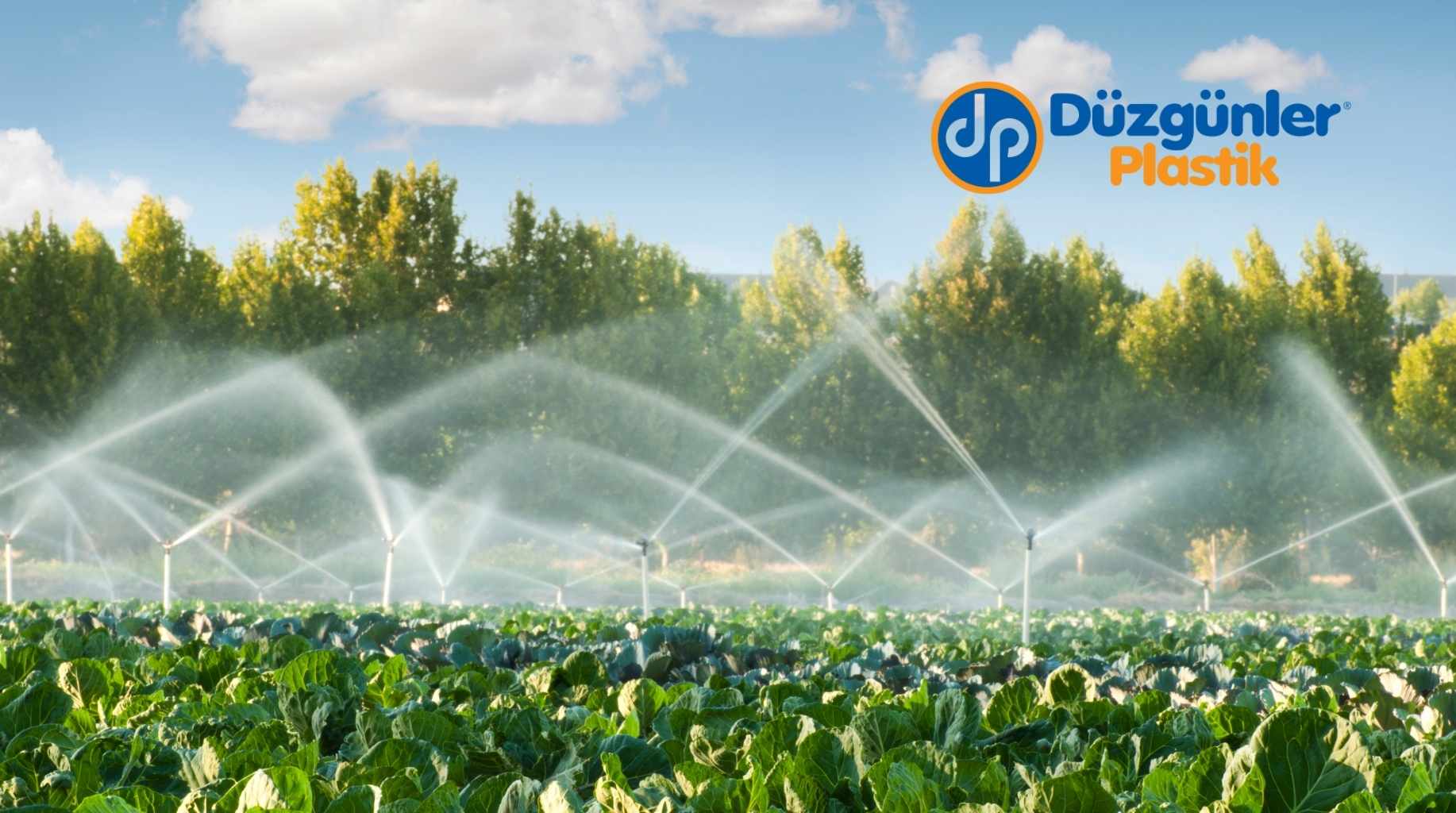
Short answer: latched sprinkler lines excel in wide-area crops such as cereals, alfalfa, and pasture; drip irrigation excels in vegetables, orchards, and row crops. On most farms, the two methods are complementary rather than competing.
Latched sprinkler system — pros and limits:
-
Pro: Portability lets one pipe set irrigate several plots; the initial investment is flexible.
-
Pro: Effective for germination irrigation and for crops covering large areas.
-
Limit: Wind can distort the distribution pattern, and evaporation losses are higher than drip.
Drip irrigation — pros and limits:
-
Pro: Delivers water directly to the root zone, giving the highest water savings, and makes fertigation easy.
-
Limit: Requires filtration and clogging management; impractical for densely sown crops such as cereals.
Detailed guidance on irrigation methods and water efficiency is available from the FAO Land & Water portal.
Is Buying Second-Hand Sprinkler Pipes a Good Idea?
Used sprinkler pipes look economical at first, but UV aging, gasket condition, and latch wear cannot be judged from the outside. A line that leaks or cracks under pressure causes both water and crop losses in mid-season, so the remaining service life and failure risk should be weighed alongside the purchase price.
Which Crops Are Irrigated with Latched Pipes?
-
Wide-area irrigation of cereals such as wheat and barley
-
Surface irrigation of alfalfa, sainfoin, and pasture
-
Growth-stage irrigation of sugar beet and maize
-
Germination irrigation in vegetable production
-
Cooling irrigation in seedling and nursery areas
|
A Note from the Field In farming communities, the criterion mentioned most often when choosing sprinkler pipe is not price but the quality of the latch and gasket, together with the pipe's UV resistance. Since a leaking coupling means water and labor lost all season, experienced growers prefer pipes manufactured to recognized standards. |
Frequently Asked Questions - FAQ
What material are latched sprinkler pipes made of?
Düzgünler Plastik latched sprinkler pipes are made of high-density polyethylene (HDPE) and produced in accordance with the TS EN 12201-3 standard. The UV-stabilized structure provides a long service life in field conditions.
Which pressure options are available for latched pipes?
The range includes four pressure classes: 5, 6, 8, and 10 Atü. The choice should be based on pump pressure, line length, and field slope.
Does a latched connection leak under pressure?
A correctly assembled latch coupling does not leak. The latch locks the pipe against the gasket, keeping the joint tight even under pressure, provided the gasket is clean and undamaged.
Do sprinkler pipes degrade in the sun?
Plastic pipes without UV stabilizers become brittle over time under sunlight. Latched sprinkler pipes produced from UV-resistant HDPE are protected against field-level sun exposure.
How should latched pipes be stored at the end of the season?
Drain the line completely, inspect the gaskets, and stack the pipes on a flat surface away from direct sunlight.
People Also Ask - PAA
What determines agricultural irrigation pipe prices?
The main factors are pipe diameter, pressure class (Atü), wall thickness, line length, and accessory needs such as sprinkler heads, risers, and end caps.
How is uniform water distribution achieved on a latched line?
The key is spacing the sprinkler heads according to the manufacturer's recommendation and maintaining pressure along the line, since very long lines suffer pressure drop.
When is sprinkler irrigation advantageous in field crops?
Sprinkler irrigation is advantageous on light-textured soils with high infiltration rates, on land that is not fully leveled, and for crops covering wide areas.
How long do sprinkler pipes last?
Service life depends on material quality, correct pressure-class selection, and off-season storage conditions. HDPE pipes produced to recognized standards and stored properly serve for many years.
About the Author: This content was prepared by the Düzgünler Plastik technical team. Founded in Konya in 1975, Düzgünler Plastik manufactures latched sprinkler pipes, column pipes, deep well pipes, and HDPE PE100 pipes on production lines designed by its in-house R&D department, under the ISO 9001 quality system.
For more information about our products and production processes, please contact us.
For more content, please visit our blog.
Similar Blogs