
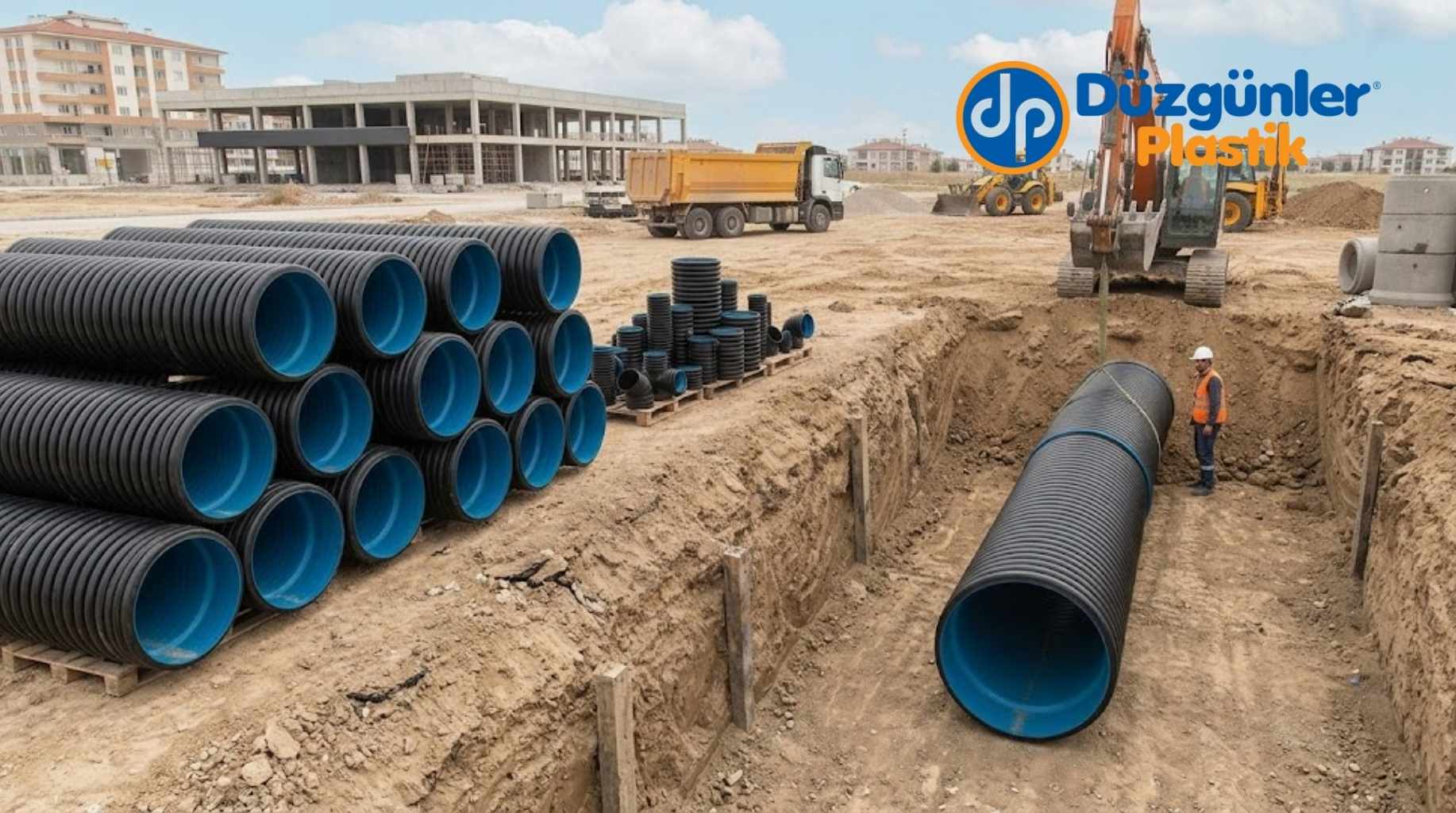
Corrugated Pipe Price Factors
Corrugated Pipe Price Factors: Diameter, SN Class, and Length Explained
Four main factors determine corrugated pipe price: diameter, SN class (SN4 or SN8), standard length, and order quantity. Rather than a fixed price list, quotes are built around these variables; this guide explains each factor and answers the most common diameter-based questions about double-wall corrugated HDPE pipe.
How Does Diameter Affect Corrugated Pipe Price?
As the diameter increases, the amount of HDPE raw material and production time both increase, which directly affects cost. Smaller diameters are used for garden and plot drainage or cable protection, while larger diameters serve major infrastructure and sewer lines. The table below summarizes common diameters and typical applications.
|
Diameter |
Typical Application |
Price-Affecting Feature |
|
Ø110 mm |
Garden and plot drainage, cable protection |
Lowest raw material volume |
|
Ø200 mm |
Residential infrastructure, stormwater line |
Mid-range wall thickness |
|
Ø300 mm |
Street drainage, collector line |
Wall thickness varies by SN class |
|
Ø600 mm |
Municipal infrastructure, main collector |
Higher raw material and freight volume |
|
Ø1000 mm |
Large-scale infrastructure, industrial site drainage |
Highest production and logistics cost |
How Does SN Class (SN4 vs SN8) Change the Price?
SN4 corrugated pipe is produced with a thinner wall rated for 4 kN/m² ground load and suits lighter applications such as garden or agricultural drainage. SN8 requires a thicker wall structure rated for 8 kN/m², which is why it costs more and is used under roads and parking areas where traffic load is a factor.
Why Is Pricing Usually Quoted per Standard Length?
A 6-meter length is the most common standard for corrugated pipe transport and installation, so quotes are typically built around this reference unit — for example, when comparing a double-wall corrugated pipe across different diameters. Custom lengths are evaluated separately per project.
Are Corrugated Pipe Fittings Included in the Price?
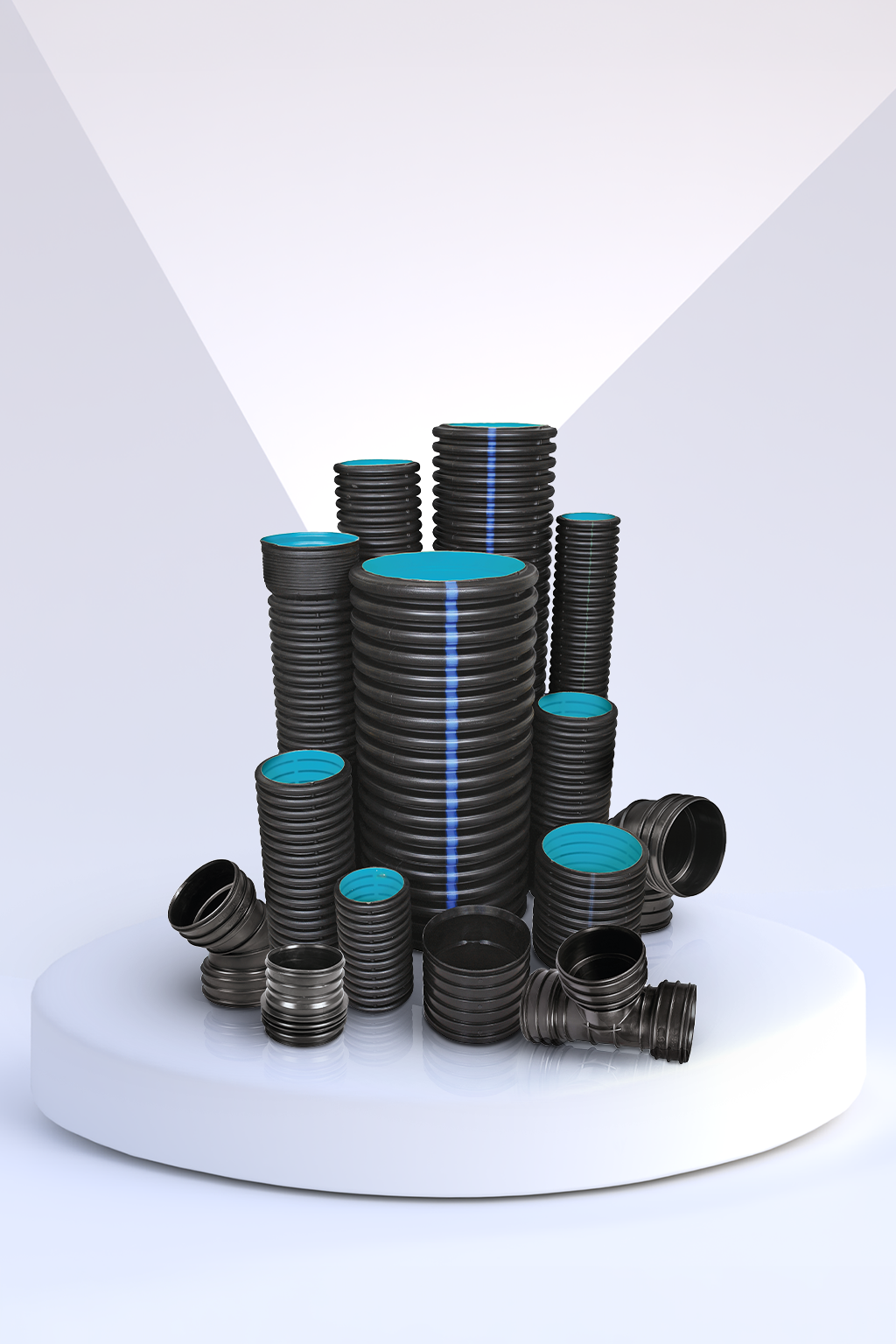
Fittings such as couplers, elbows, reducers, and end caps are priced as separate line items from the pipe body. Their type and quantity are distinct cost components when planning a drainage line.
-
Coupler/sleeve: joins two pipe ends with a sealed connection
-
45° / 90° elbow: used where the line changes direction
-
Reducer: connects two pipes of different diameters
-
End cap: closes off the end of a line
Corrugated Pipe vs PVC Pipe: What's the Difference?
A corrugated pipe is made from HDPE with a ribbed outer wall and smooth inner bore, giving it higher ground-load resistance for deep burial and heavy traffic use. A plain PVC pipe is generally used for indoor drainage, clean water transport, and lighter applications rather than deep infrastructure lines.
Frequently Asked Questions - FAQ
Why isn't there a fixed corrugated pipe price list?
Diameter, SN class, length, and order quantity vary by project, so quotes are prepared individually rather than from one fixed list.
What is a double-wall corrugated pipe used for?
A double-wall corrugated pipe combines a ribbed outer wall for strength with a smooth inner wall for flow efficiency, making it suitable for drainage, stormwater, and cable protection lines.
What determines the price of a large-diameter corrugated pipe?
For large diameters such as Ø1000 mm, the price is determined mainly by HDPE material volume, SN class, production time, and the higher freight volume required for transport.
Are corrugated pipe couplers sold separately?
Yes, couplers and other fittings are separate product items and are ordered according to project requirements.
Does unit cost change with bulk orders?
Unit production and freight costs generally trend lower as order volume increases, though the exact rate depends on the project and diameter.
People Also Ask - PAA
How much does a corrugated pipe cost?
There is no fixed figure; cost depends on diameter, SN class, length, and order quantity. Contacting the manufacturer directly is recommended for a current quote.
What is HDPE corrugated pipe made of?
It is made from high-density polyethylene (HDPE), which provides chemical resistance, flexibility, and long-term durability for buried applications.
What are common corrugated pipe fitting types?
The most common types are couplers, 45°/90° elbows, reducers, and end caps, each used at a different point in a drainage line.
What length does corrugated pipe come in?
The most common industry-standard length is 6 meters; custom lengths are evaluated separately per project.
For more information about our products and production processes, please contact us.
For more content, please visit our blog.
Similar Blogs