
Guide to Selecting U-PVC Column Pipes for Well Projects
In a well project, a U-PVC column pipe is the line that carries the water pushed up by the submersible pump to the surface; the right choice means matching the pipe to the well depth and pump, planning it in harmony with the casing (drilling) pipe and connection parts, and sequencing the installation correctly. In short, a column pipe should be evaluated within the whole well system, not on its own.
This guide treats the column pipe as part of a well project: which data to collect, how the need changes by well type, and what installation order to follow.
What Does a U-PVC Column Pipe Do in a Well Project?
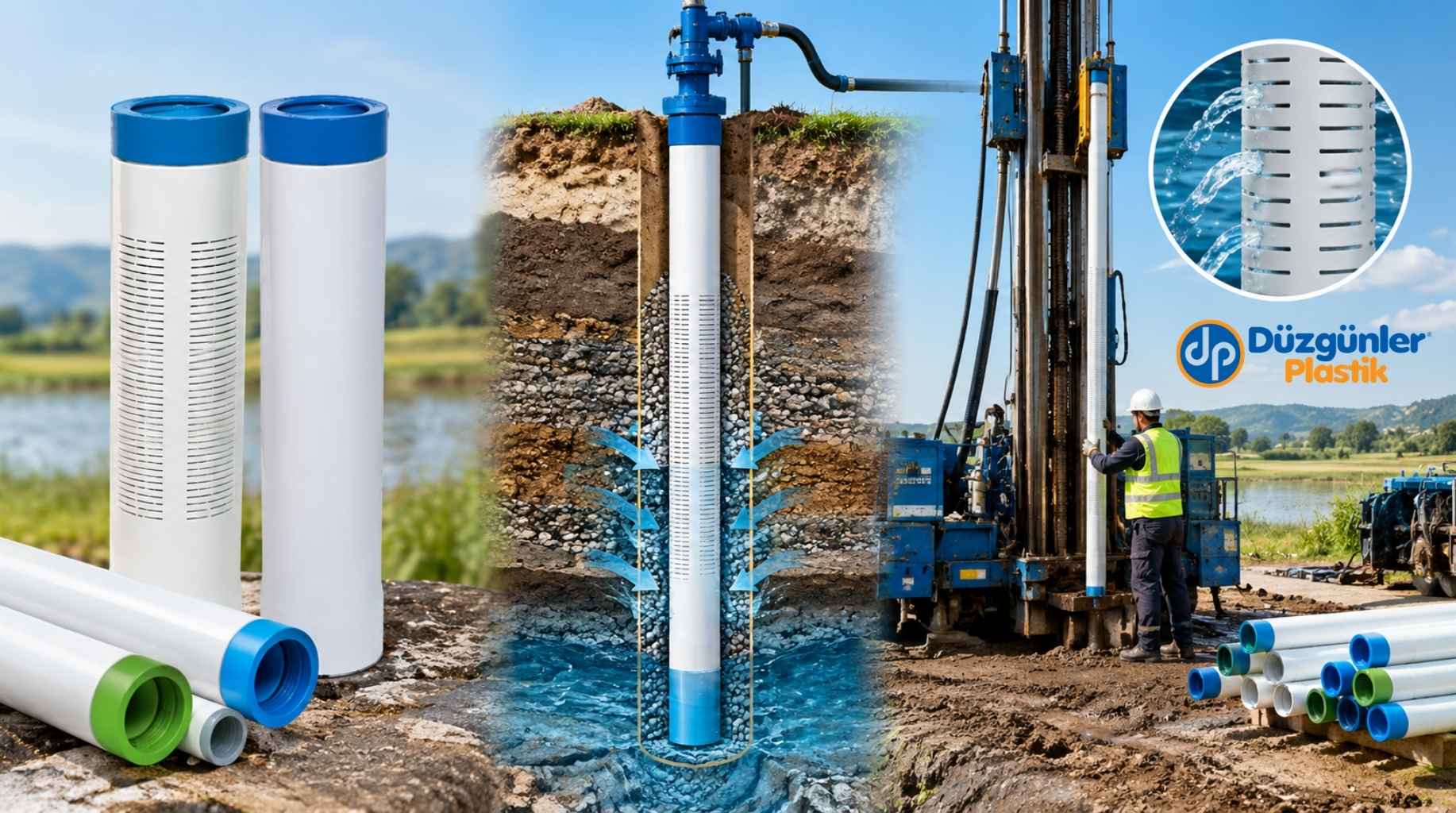
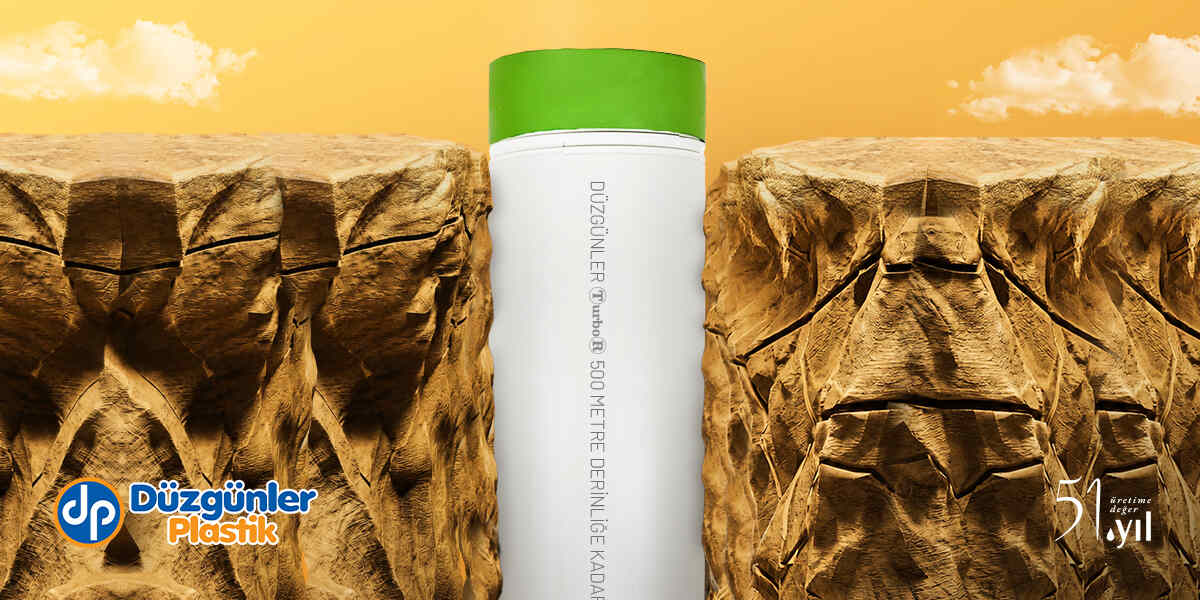
A U-PVC column pipe connects to the submersible pump at the bottom of the well and carries the pumped water to the surface. As the pump goes deeper the column pipe gets longer, so it must carry both the water column pressure and the pump’s weight.
The column pipe is the most critical line in a well project: in a fault it must be pulled up from meters of depth together with the pump. Planning it correctly at the project stage reduces later interventions and cost.
What Is the Difference Between a Column Pipe and a Casing (Drilling) Pipe?
The two most commonly confused products in well projects are the column pipe and the casing (drilling) pipe; they do different jobs. The column pipe carries water and moves with the pump; the casing pipe forms the well wall and stays fixed.
|
Criterion |
U-PVC Column Pipe |
U-PVC Casing (Drilling) Pipe |
|
Job |
Carries water pump→surface |
Forms the well wall, prevents collapse |
|
Movement |
Goes down/up with the pump |
Fixed in the well |
|
Connection |
Square thread + coupler + "O" ring |
Push-fit/thread, plain or slotted |
|
Load |
Water column + pump weight |
Ground/wall pressure |
|
Project role |
Water conveyance line |
Well structure |
What Information Do You Need to Plan a Column Pipe for a Well Project?
For accurate U-PVC column pipe planning, collect this data at the project start:
-
Well depth and the level the pump will reach
-
Static and dynamic water level
-
Pump weight and flow (m³/hour)
-
Well diameter and casing pipe inner diameter
-
Sand/silt content of the water (wear risk)
This data lets you set both the column pipe series and the connection type correctly. A choice made with missing data causes mismatches during the project.
How Does Column Pipe Need Change by Well Type?
Not every well is the same; column pipe need changes with the well type.
-
Shallow wells: Short line and lower pressure; a standard series is usually enough.
-
Deep wells: Long line, high water column pressure and a heavy pump; a higher-strength series is needed.
-
High-flow / commercial projects: Continuous operation and vibration; strong connection and sealing come first.
What Should the Column Pipe Installation Order Be?
Column pipe installation is safe when the project order is followed:
-
The casing pipe is placed in the well and the well structure is prepared.
-
The submersible pump is connected to the first column pipe section.
-
Column pipe sections are added with couplers and "O" rings and lowered with the pump.
-
Connection sealing is checked and the system is tested.
Full thread seating and a correctly placed "O" ring at each joint prevent loosening at depth.
Common Column Pipe Mistakes in Well Projects
-
Choosing the pipe on price alone without accounting for pump weight.
-
Confusing the column pipe with the casing pipe.
-
Neglecting connection threads and the "O" ring during installation.
-
Using an under-strength series for the well depth.
Well Projects with Düzgünler Plastik
Founded in 1975 under Ekrem Düzgün and today managed by Ziya Düzgün and Kemal Düzgün, Düzgünler Plastik is a Konya-based plastic pipe manufacturer. It was the first in Turkey to produce submersible-pump plastic column pipes, pioneering the field.
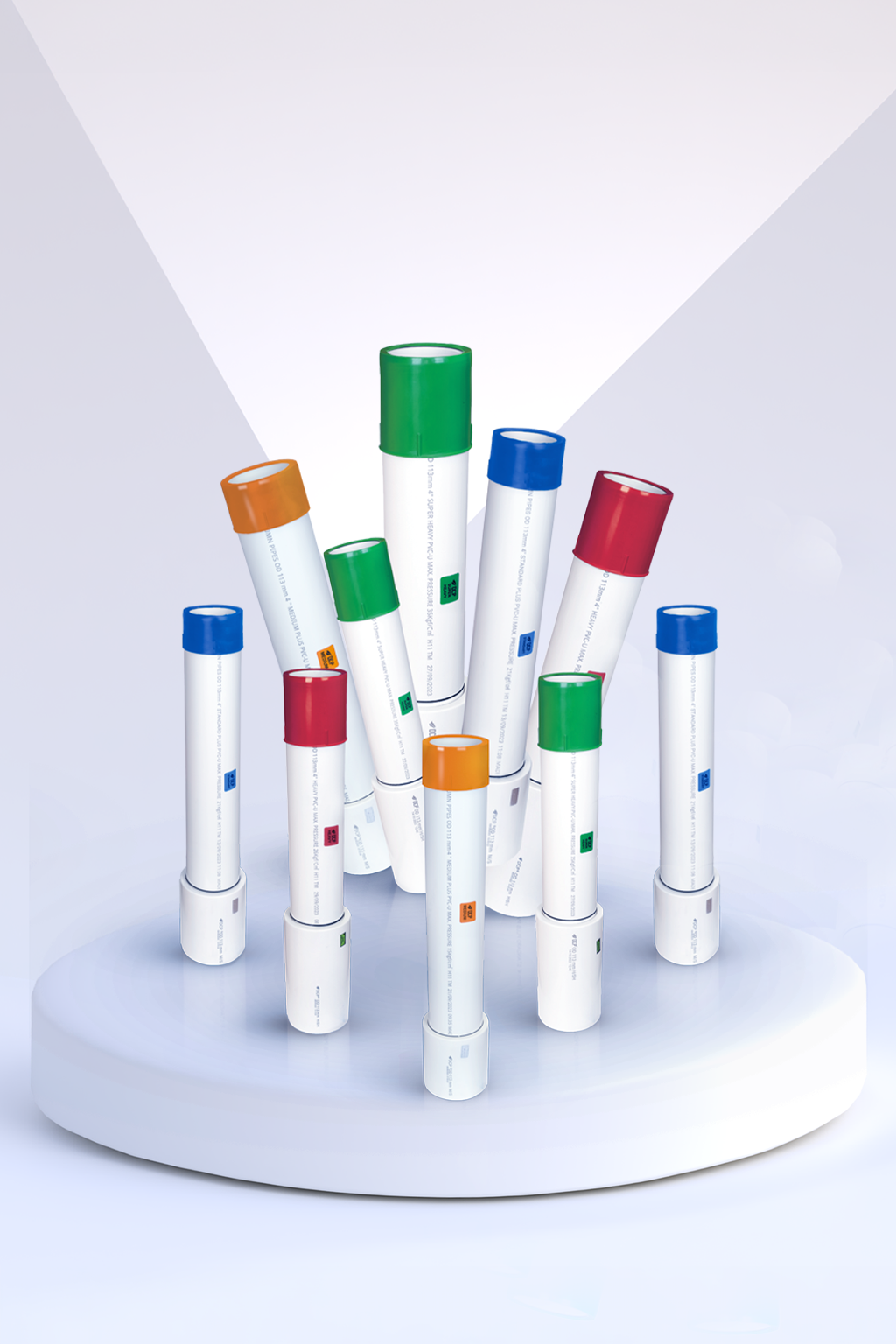
Düzgünler Plastik offers U-PVC column pipes in DCP Medium Plus, Standard Plus, Heavy and Super Heavy models for different well depths, and completes the other components of a well project with its casing pipes and HDPE PE100 lines. All production runs under the ISO 9001 quality management system.
Frequently Asked Questions - FAQ
What is the most important criterion when selecting a column pipe for a well?
Well depth and pump weight are the most decisive. As depth increases, the pipe must carry higher water column pressure and pump load.
Can a column pipe and a casing pipe be used interchangeably?
No. The column pipe carries water and moves with the pump; the casing pipe forms the well wall and stays fixed. They are made for different jobs.
Which column pipe should be preferred for deep wells?
For deep wells, prefer stronger series with thicker walls and robust connections, reducing loosening and leakage risk over a long line.
Why is the "O" ring important in a column pipe connection?
The "O" ring keeps sand and silt out of the threaded area, improving sealing and reducing loosening — giving a safe line in a deep well.
Which documents should be requested for a column pipe in a well project?
Request the ISO 9001 certificate, standard conformity and pressure/sealing test reports. Documents prove the pipe will withstand project conditions.
People Also Ask - PAA
What is a U-PVC column pipe?
A U-PVC column pipe is a jointed pipe line made of rigid PVC that lets a submersible pump carry water to the surface.
How deep can a column pipe go?
The depth depends on the strength of the chosen pipe series and the pump; deep wells use higher-strength series.
How long does a column pipe last in a well project?
A correctly selected and installed U-PVC column pipe is long-lasting because it does not corrode; life depends on operating conditions and water content.
Author: Düzgünler Plastik Technical Content Team — shares knowledge on plastic pipe production and well projects. For product standards, refer to official sources such as the Turkish Standards Institution (TSE).
For more information about our products and production processes, please contact us.
For more content, please visit our blog.
Similar Blogs