
Advantages of PE100 Pipes in Water Distribution Networks Against Ground Movements
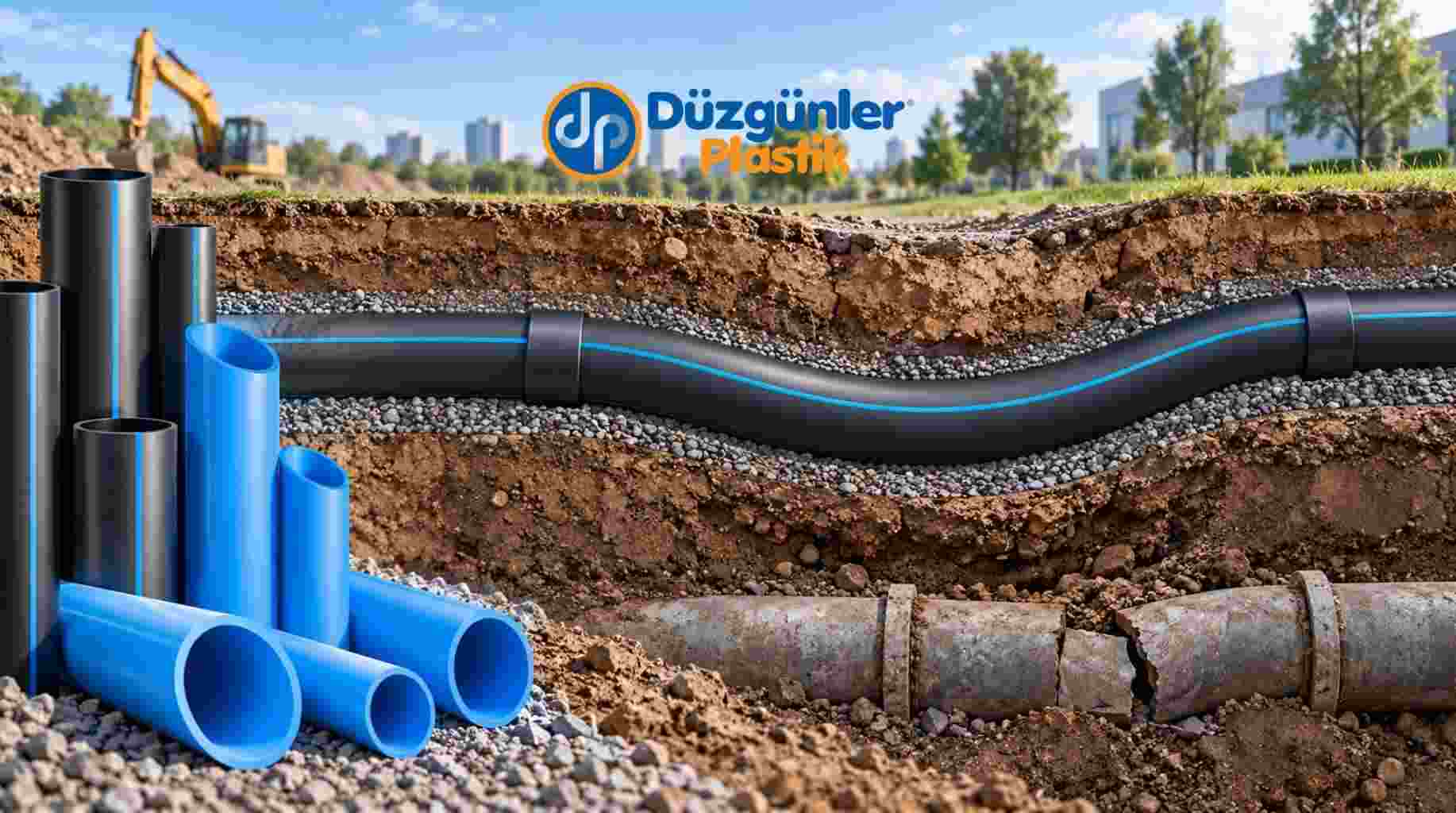
PE100 pipe has clear advantages against ground movement in water networks: it is flexible, its fused joints form a continuous line, and it can move with the ground when the soil settles or shifts. In segmented pipe, earthquake damage often occurs at the joints; a fused HDPE line has far fewer of them.
This article explains why, and where the limits are, using Düzgünler Plastik's HDPE PE100 pipes, with notes for buyers in Spain and Morocco.
How Does Ground Movement Damage a Water Pipe?
When soil settles, slides or shakes in an earthquake, the pipe is pulled, bent and pushed apart at its joints. In a rigid, segmented line the load tends to concentrate at those joints. A flexible, continuous pipe can adapt to the deformation.
Why Is PE100 Pipe Resistant to Ground Movement?
-
High flexibility: PE100 has a tensile yield strain of 8% or more, much larger than metal materials.
-
Continuous line: Pipes and fittings joined by electrofusion or butt fusion behave like a single piece.
-
Ductility: According to Plastics Pipe Institute (PPI) experts, HDPE can move with the earth instead of resisting the deformation.
-
Corrosion resistance: It does not rust like metal pipe; PPI describes HDPE as corrosion resistant.
How Far Can PE100 Pipe Be Bent?
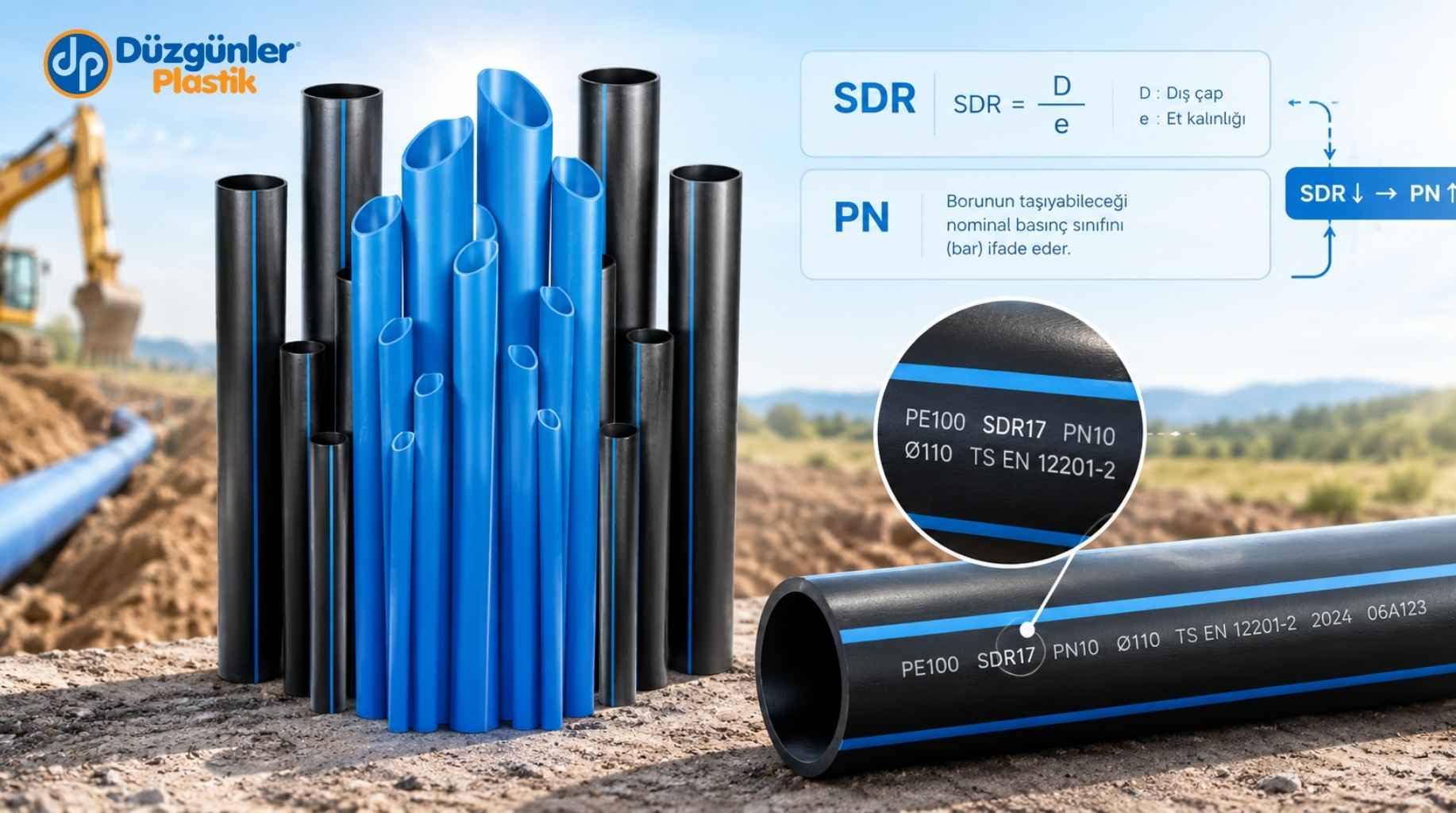
Guidance based on the PPI handbook sets the minimum field cold-bend radius at 25 times the outside diameter for SDR 11 and 27 times for SDR 17. For a 110 mm SDR 11 pipe, that is about 2.75 metres.
If a fitting or mechanical joint sits in the bend, the radius rises to 100 times the outside diameter. Always follow the manufacturer's recommendation.
PE100 Pipe vs Segmented Push-Fit Pipe: Comparison
|
Criteria |
Fused PE100 pipe |
Segmented push-fit pipe |
|---|---|---|
|
Joints |
Continuous fused line |
Socket joint at every length |
|
Under ground movement |
Can flex along the line |
Load can concentrate at joints |
|
Pros |
Leak-proof fused line, corrosion resistance |
Push-fit joints install quickly |
|
Cons |
Needs fusion equipment and trained crew |
Earthquake damage often occurs at joints |
How Did PE Pipes Perform in Earthquakes?
-
Japan, 1995 Hyogoken-Nanbu earthquake: No damage was reported to PE gas and water service pipes, and PE later began to be used for water distribution.
-
New Zealand, Canterbury 2010–2011: About 32 km of HDPE water pipe laid after the first quake showed no damage in the later ones.
These are not design guarantees. PPI experts recommend calculating wall thickness for the expected ground movement, so every project needs engineering review.
What Should Buyers in Spain and Morocco Check on PE100 Pipe?
Ground movement matters in water networks in Spain and Morocco alike. USGS recorded a magnitude 6.8 earthquake in Al Haouz, Morocco, on 8 September 2023, with landslides and power outages across seven provinces.
-
Conformity to EN 12201-2, the European standard for PE water pipe
-
The SDR class and diameter matched to pressure and bend requirements
-
Fusion jointing and trained crews for the whole line
-
Manufacturer quality management certification
What Do Düzgünler Plastik PE100 Pipes Offer?
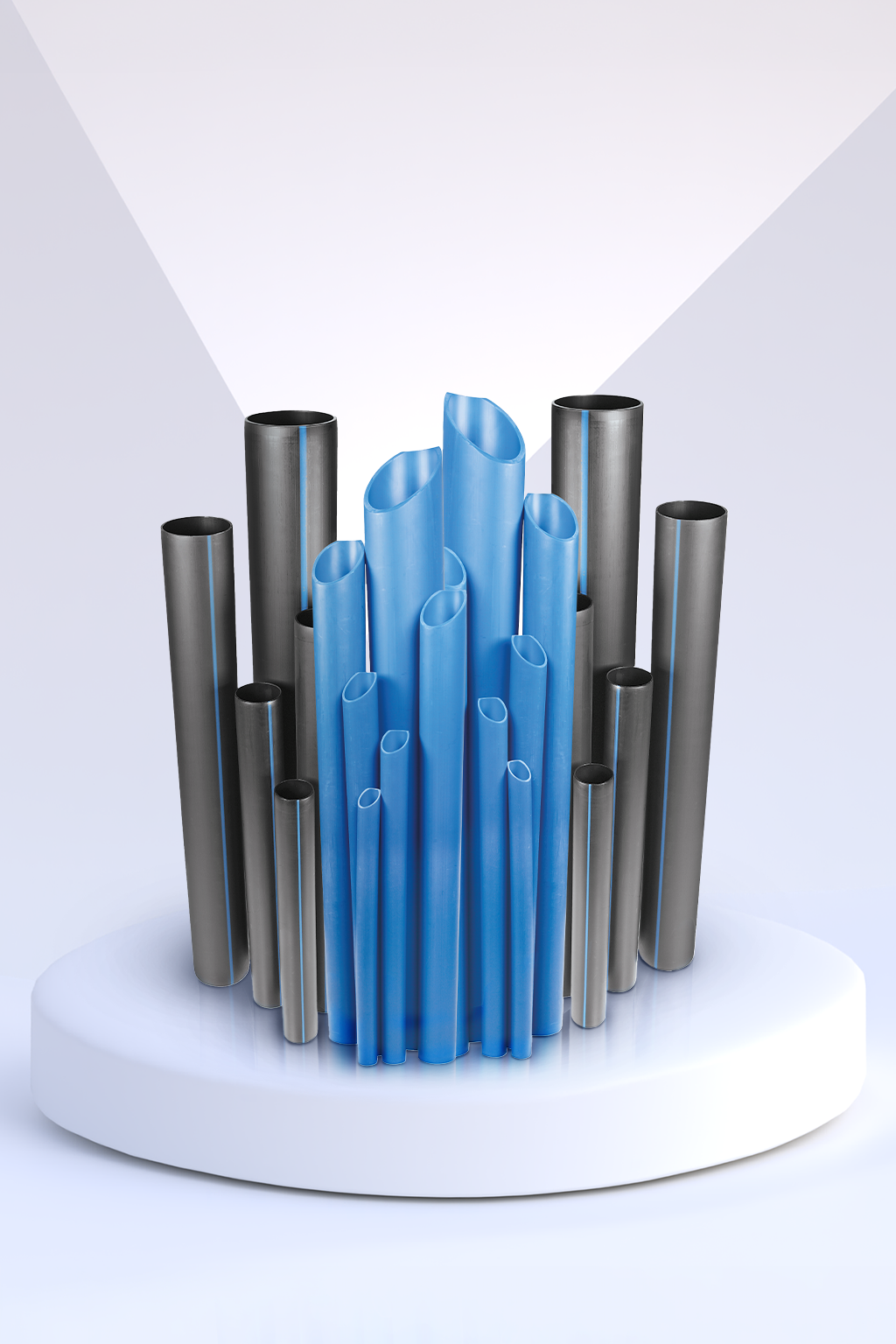
Düzgünler Plastik states that its HDPE PE100 pipes are produced in line with TS EN 12201-2 and the ISO 9001:2015 quality management system, for clean water, drinking water and agricultural irrigation lines. They come in coil and straight options, and the company cites a low friction coefficient for energy savings.
Founded in 1975 by Ekrem Düzgün in agricultural machinery, the company is now led by Ziya Düzgün and Kemal Düzgün. It states it was first in Türkiye to produce submersible pump plastic column pipes. To choose the right PE100 pipe diameter and pressure class for a project in Spain or Morocco, see our HDPE PE100 pipes page or contact our engineers.
Frequently Asked Questions - FAQ
Does PE100 pipe break when the ground settles?
PE100 is flexible and ductile, so it can deform without breaking. Extreme settlement cannot be ruled out, and limits depend on the design.
Are fused or mechanical joints better?
Where ground movement is expected, fused joints are preferred because they keep the line continuous. Fittings and mechanical joints are rigid and need larger bend radii.
Is PE pipe safe in an earthquake?
Experience in Japan and New Zealand is positive, but it is not a guarantee. Wall thickness and laying conditions need engineering calculation.
What is the difference between coil and straight PE100 pipe?
Düzgünler Plastik offers coil and straight lengths. Coils can reduce the number of joints on long runs; straight lengths are preferred for large diameters.
Which standard should buyers in Spain and Morocco ask for?
EN 12201-2 is the European reference for PE water pipe, and TS EN 12201-2 is Türkiye's adoption of it. Düzgünler Plastik states its PE100 pipes meet TS EN 12201-2 and the ISO 9001:2015 quality management system; ask for the declaration of conformity.
People Also Ask - PAA
What is the difference between flexible and rigid pipe?
Flexible pipe bends to follow ground movement; rigid pipe resists deformation and load can concentrate at joints.
What is the minimum bend radius of PE100 pipe?
About 25 times the outside diameter for SDR 11 and 27 times for SDR 17, as cold field bending.
Does PE100 pipe rust underground?
No. HDPE is not a metal and is corrosion resistant.
Author and Sources
This article was prepared by the technical team of Düzgünler Plastik from the company's HDPE PE100 product information.
Sources: PPI: HDPE water lines in seismic areas · Kubota ChemiX: PE pipeline performance against earthquake (PPCA 2018) · DuraLine: minimum bend radius · Chevron Phillips: PE pipes for seismic protection · USGS: M 6.8 Al Haouz, Morocco
For more information about our products and production processes, please contact us.
For more content, please visit our blog.
Similar Blogs