
How to Choose the Best Corrugated Pipe? 7 Quality Criteria
The best corrugated pipes from Türkiye are HDPE pipes made to EN 13476-3, with a ring stiffness class (SN) backed by test reports, clearly marked diameters, and sealed gasket joints. "Best" is not a brand name; it is a quality level you can verify on paper and on site, whether you buy for Spain or Morocco.
Quick Summary: What Makes a Corrugated Pipe the Best Choice?
-
Standard: EN 13476-3 (non-pressure drains and sewers).
-
Stiffness: SN4 (4 kN/m²) or SN8 (8 kN/m²), verified by EN ISO 9969 testing.
-
Joint: Gasketed coupler for a sealed connection.
-
Use: Wastewater, stormwater and cable protection; not pressure water.
What Are Corrugated Pipes and Where Are They Used?
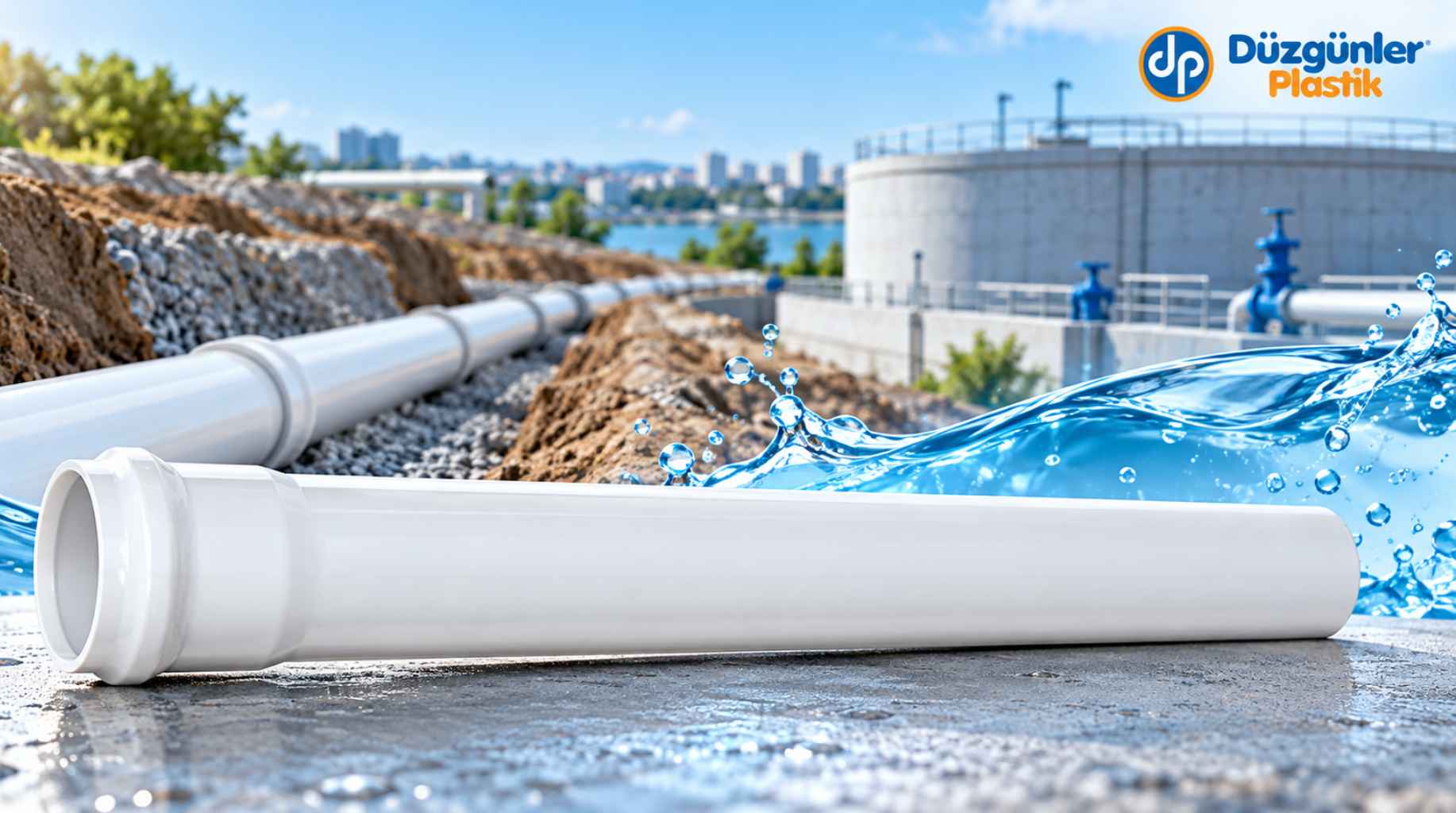
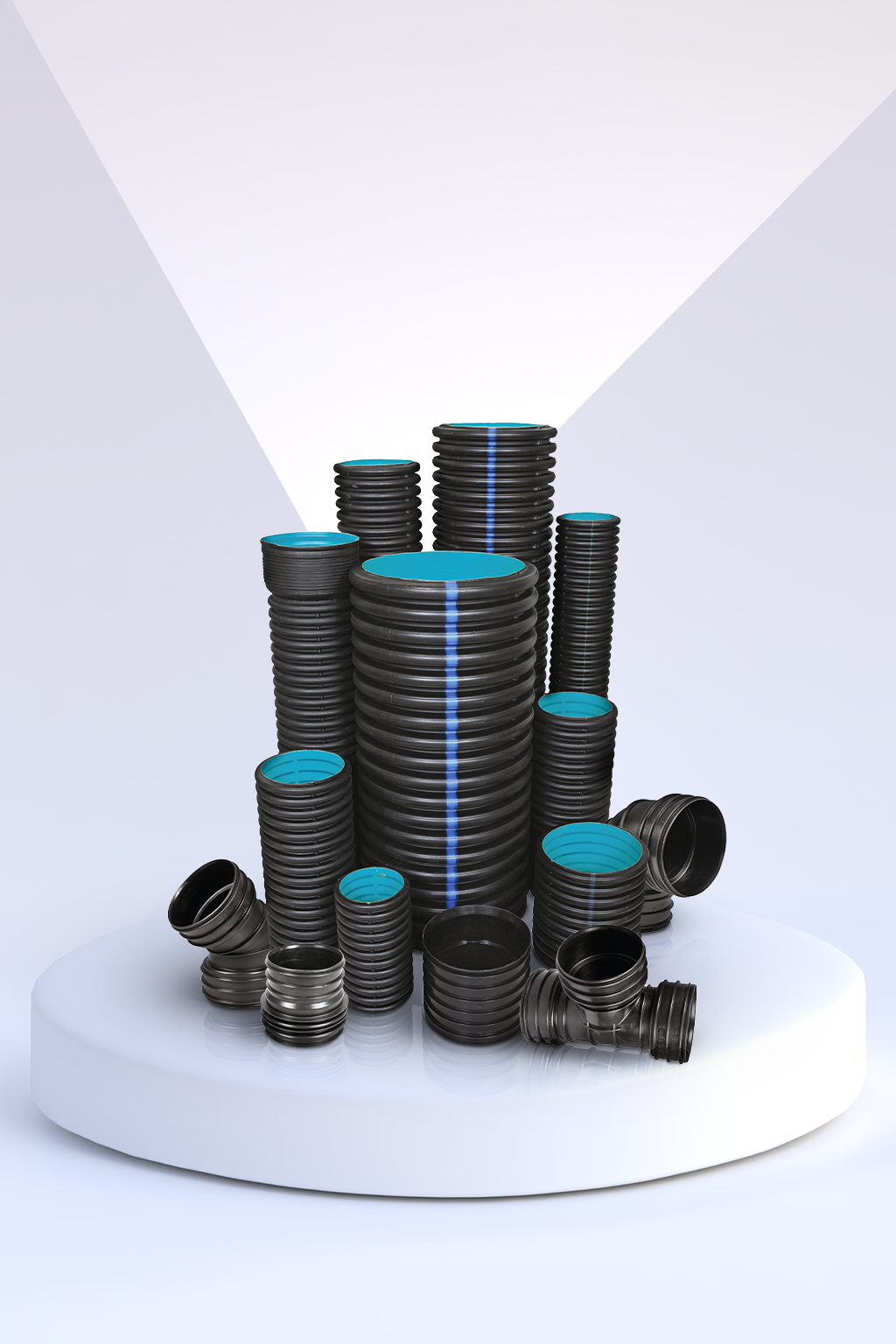
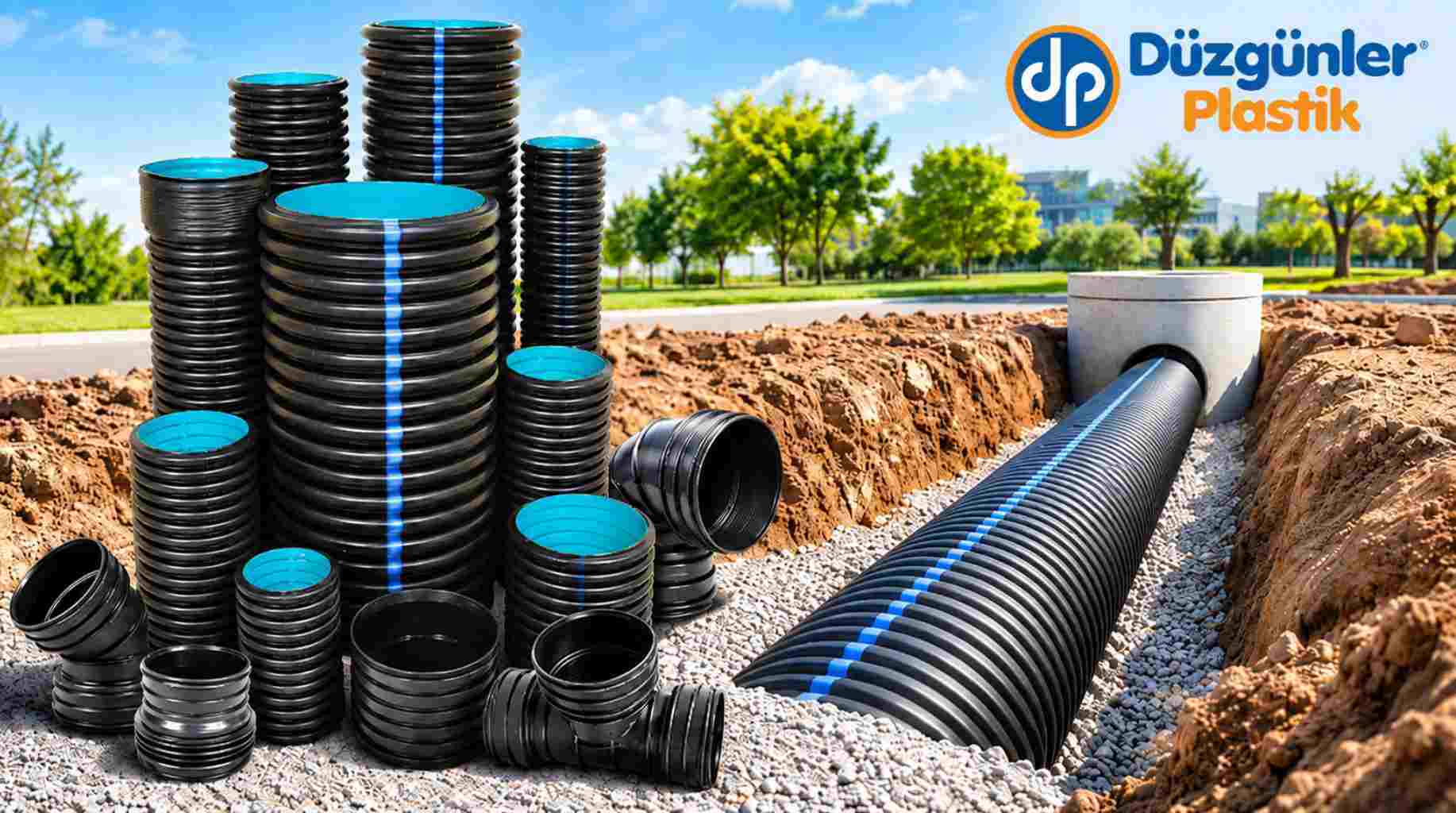
A corrugated pipe is a double-wall plastic pipe: the ribbed outer wall carries soil and traffic loads, and the smooth inner wall helps water flow. It is designed for gravity (non-pressure) lines:
-
Domestic and industrial sewer lines
-
Stormwater and roadside drainage
-
Power and telecom cable protection
Which 7 Criteria Define the Best Corrugated Pipes?
Judge quality by marking and test documents, not catalogue claims.
1. Which Standard Is the Pipe Made To?
Pipes with a corrugated outer wall and smooth inner wall fall under EN 13476-3, Type B. The current edition is EN 13476-3:2025. A quote without a standard number is not enough.
2. Is the SN Class Backed by a Test Report?
SN shows how well a pipe resists crushing under external load. EN ISO 9969 calculates it from the force needed to deflect the pipe by 3% of its diameter. Ask for the test report for your diameter.
3. Is the Size Based on Inner or Outer Diameter?
The standard defines inner-diameter (DN/ID) and outer-diameter (DN/OD) series. Flow calculations use the inner diameter, so the quote must state which applies.
4. Is the Raw Material HDPE?
HDPE is light, does not rust, and resists many wastewater chemicals. The data sheet should state the material.
5. Are the Gasket and Coupler Watertight?
Most leaks happen at joints. A gasketed coupler keeps groundwater out and wastewater in.
6. Do Fittings Come From the Same System?
Bends, couplers, and tees from different makers may not fit. One system reduces installation risk.
7. Does the Manufacturer Provide Documents and Support?
A reliable supplier sends data sheets, test reports, and installation advice with the quote.
|
Site Tip: Check the Marking on Delivery Marking usually shows the standard, nominal size (DN/ID or DN/OD), SN class, material, and batch data. Query any mismatch before laying. |
What Should Buyers in Spain and Morocco Check When Importing Corrugated Pipes?
Buyers in Spain
-
Spain and Türkiye are both CEN members, so the same standard applies; in Spain it is published as UNE-EN 13476-3.
-
Confirm the SN class your client in Spain requires for road networks.
-
Ask for test reports in English or Spanish for site approval.
Buyers in Morocco
-
Check which standard the tender in Morocco names; it may cite EN 13476-3 or the ISO equivalent, ISO 21138-3.
-
Ask whether the client in Morocco needs technical documents in French.
-
Confirm pipe length and packing for the container load plan.
SN4 or SN8: Which Corrugated Pipe Should You Choose?
SN4 suits low-load areas such as gardens and parks. SN8 suits roads, car parks and industrial yards with high, repeated loads. Confirm the class with a structural calculation covering burial depth, soil, and backfill.
|
Criterion |
SN4 |
SN8 |
|
Ring stiffness |
4 kN/m² |
8 kN/m² |
|
Typical load |
Low and controlled |
High and repeated |
|
Example use |
Gardens, parks, building drainage |
Roads, car parks, industrial sites |
Corrugated Pipes vs Concrete Pipes: Which Is Better?
Pros and Cons of Corrugated Pipes
-
Pro: No corrosion, even in acidic sewer conditions.
-
Pro: Light; less lifting equipment needed.
-
Con: Performance depends on correct bedding and compaction.
Pros and Cons of Concrete Pipes
-
Pro: Rigid wall carries high loads on its own.
-
Con: Heavy; needs more machinery.
-
Con: Can wear in acidic sewer conditions.
What Affects Corrugated Pipe Prices?
Prices depend on diameter, SN class, length, quantity, and freight. For Spain or Morocco, compare the delivered total cost including fittings, not the price per metre. Request a quote with diameter, SN class, and quantity.
When Do You Need U-PVC Pressure Clean Water Pipes Instead?
For drinking water mains or pump outlets, choose U-PVC pressure clean water pipes or HDPE PE100 pipes. Düzgünler Plastik produces U-PVC pressure clean water pipes rated from 4 to 16 atm.
What Do Düzgünler Plastik Corrugated Pipes Offer?
Düzgünler Plastik manufactures HDPE corrugated pipes at its plant in the Konya 3rd Organized Industrial Zone, Türkiye. Founded in 1975 by Ekrem Düzgün, it moved into plastic pipes in 1996–1999 and is led today by Ziya Düzgün and Kemal Düzgün.
The range includes SN4 and SN8 classes with a gasket joint system, made with Triplex production technology on machinery designed by the in-house R&D team.
For export quotes, visit our Corrugated Pipes category page or contact our export team.
|
About the Author Prepared by the Düzgünler Plastik technical team using company product data and the standards below. |
Frequently Asked Questions - FAQ
What is a corrugated pipe?
An HDPE pipe with a ribbed outer and smooth inner wall, used for non-pressure wastewater, stormwater and cable lines.
How do I read corrugated pipe sizes?
As DN/ID (inner) or DN/OD (outer). Confirm which one a quote uses.
Is SN8 always better than SN4?
No. The right class depends on the load calculation; SN4 can suffice for low-load lines.
Can corrugated pipes carry drinking water?
No. Pressure drinking water lines need U-PVC pressure clean water pipes or HDPE PE100 pipes.
Does Düzgünler Plastik export corrugated pipes to Spain and Morocco?
It manufactures in Konya, Türkiye, and supplies buyers abroad. Contact the company for export terms.
People Also Ask - PAA
Can corrugated pipes be laid under roads?
Yes. Under roads, SN8 is usually considered, and the choice is confirmed by a structural calculation.
How do you fit a bend or coupler to a corrugated pipe?
Clean the end, seat the gasket, apply lubricant and push the fitting on straight.
What is a perforated corrugated pipe used for?
It collects groundwater for land drainage. Wastewater lines use solid, gasketed pipes.
Sources
For more information about our products and production processes, please contact us.
For more content, please visit our blog.
Similar Blogs